

India is one of the most biodiverse nations on Earth. From the snow-dusted ridgelines of the Himalayas to the tidal mangroves of the Sundarbans, the subcontinent shelters an extraordinary range of ecosystems, each supporting species found nowhere else in the world. Yet this biological wealth is under siege. Habitat destruction, poaching, climate change, and human-wildlife conflict have pushed hundreds of species to the margins of survival. According to the IUCN Red List — the world's most comprehensive inventory of species' conservation status — India is home to dozens of critically endangered animals, many of which could vanish within a generation if protective measures are not intensified.

The relationship between wildlife and human civilization in India is ancient and complex. Tigers prowl through Hindu mythology; elephants carry the image of Ganesha; peacocks adorn the national emblem. Yet cultural reverence has not always translated into practical protection. Understanding which species are most at risk, why they are endangered, and what is being done to save them is the first step toward meaningful conservation action.
India's Most Endangered Animals: A Species in Crisis
The Bengal Tiger
No animal in India carries more symbolic weight than the Bengal tiger. Once hunted to near extinction by colonial-era sport hunters and poachers, the tiger became the face of India's conservation awakening. Project Tiger, launched in 1973, marked a turning point. Today, India holds approximately 75% of the world's wild tiger population — a figure that sounds reassuring until one considers that fewer than 3,200 Bengal tigers remain in the wild globally. The IUCN Red List classifies the Bengal tiger as Endangered. Habitat fragmentation and retaliatory killings by communities living near tiger reserves continue to threaten recovery. Despite progress, the tiger's survival remains deeply tied to the integrity of India's national parks and protected corridors.

The Indian One-Horned Rhinoceros
Kaziranga National Park in Assam is home to roughly two-thirds of the world's Indian one-horned rhinoceros population — a remarkable conservation success, but also a sobering reminder of how geographically concentrated this species has become. Listed as Vulnerable on the IUCN Red List, the greater one-horned rhino once ranged across the entire northern subcontinent. Poaching for its horn — falsely prized in traditional medicine markets — drove catastrophic declines. Thanks to aggressive anti-poaching measures and strong legislative protection under India's Wildlife Protection Act of 1972, numbers have recovered from fewer than 200 in the early 20th century to over 3,700 today. The rhino's story is among the most hopeful in Indian wildlife conservation, yet complacency remains a danger.

The Snow Leopard
High in the cold deserts of Ladakh, Himachal Pradesh, and Uttarakhand, the snow leopard moves like a ghost through rocky terrain. With fewer than 700 individuals estimated to remain in India and roughly 4,000 to 6,500 globally, the snow leopard is classified as Vulnerable on the IUCN Red List — though many wildlife scientists believe the true picture is grimmer. Prey depletion due to overgrazing by domestic livestock, retaliatory killings by herders who lose sheep and goats to predation, and climate change reshaping high-altitude ecosystems all pose existential threats. Wildlife conservation efforts in the Himalayan range are particularly challenging due to the remoteness of the terrain, making wildlife rescue and monitoring exceptionally difficult.

The Asiatic Lion
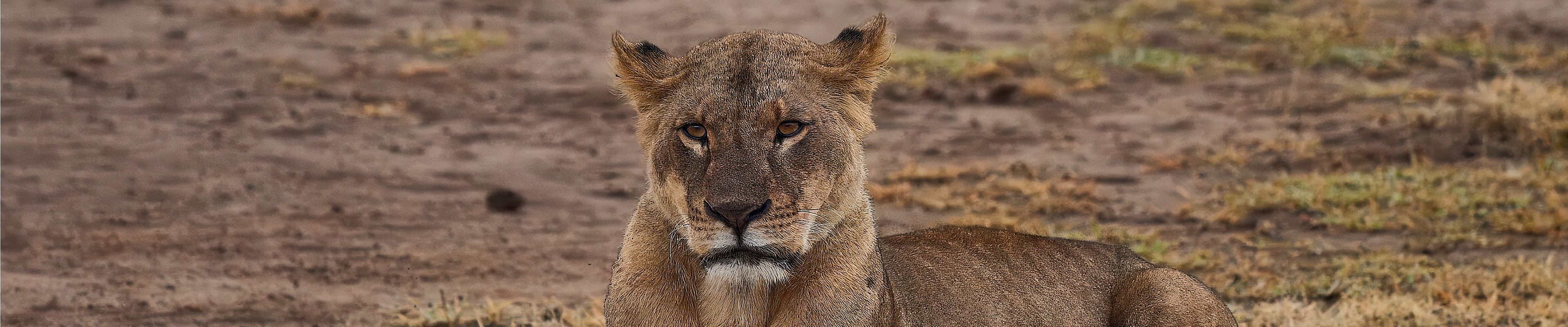
The Gir Forest National Park in Gujarat is the last refuge of the Asiatic lion. With only approximately 670 individuals remaining, the entire wild population of this subspecies exists within a single ecosystem — a genetic and ecological vulnerability that wildlife scientists have warned about for decades. The World Wildlife Federation and several international bodies have advocated for the establishment of a second population at Kuno-Palpur in Madhya Pradesh, a proposal that has been debated in Indian courts and conservation circles for years. The Asiatic lion is classified as Endangered on the IUCN Red List. Disease outbreaks, natural disasters, or a single catastrophic event in Gir could devastate the entire global wild population.

Sloth Bears and Other Endangered Bears of India
India is home to several species of bears whose populations have declined dramatically. The sloth bear, native to the Indian subcontinent, is classified as Vulnerable on the IUCN Red List. Once widely distributed across forested regions, sloth bears now face severe habitat loss and are frequently drawn into conflict with human settlements. Historically, sloth bears were captured for use as 'dancing bears' — a practice now outlawed but whose legacy left thousands of animals psychologically and physically damaged before wildlife rescue organisations stepped in to rehabilitate them. The Himalayan brown bear and the sun bear, found in northeastern India, are similarly under pressure, with population numbers difficult to verify due to their elusive nature and remote habitats. Bears in India represent a broader pattern: large mammals with significant territorial requirements are disproportionately affected by landscape fragmentation.

The Ganges River Dolphin
Among the most unusual of India's endangered animals is the Ganges river dolphin, known locally as the 'susu' for the sound it makes when it breathes. Classified as Endangered on the IUCN Red List, this blind, freshwater cetacean navigates the murky waters of the Ganga and Brahmaputra river systems using echolocation. Pollution, entanglement in fishing nets, dam construction, and reduced water flow have pushed the species to perilous lows. The Ganges river dolphin was designated India's National Aquatic Animal in 2009, raising its conservation profile, though enforcement of protective regulations along the river remains inconsistent.

The Architecture of Conservation: Who Is Doing the Work
Wildlife conservation in India operates through an overlapping architecture of government agencies, international bodies, grassroots organisations, and legal frameworks. At the national level, the National Tiger Conservation Authority and the Wildlife Crime Control Bureau play central roles. India's network of protected areas — comprising national parks, wildlife sanctuaries, conservation reserves, and biosphere reserves — covers over 5% of the country's land area.
Globally, the World Wildlife Federation has been a consistent partner in India's conservation efforts, funding research, supporting anti-poaching initiatives, and working with local communities to develop alternative livelihoods that reduce dependence on forest resources. The National Parks Conservation Association, while primarily rooted in the United States, has contributed frameworks and methodologies for protected area management that have informed conservation practice in India and beyond.
The IUCN Red List serves as the foundational scientific document for conservation priority-setting worldwide. By classifying species according to measurable criteria — population size, rate of decline, geographic range, and probability of extinction — the IUCN Red List allows governments, NGOs, and funding bodies to allocate resources where they are most urgently needed. India's involvement with IUCN assessments has grown substantially, with Indian scientists contributing data and expertise to global evaluations.

Conservation is not a single act but a sustained commitment — one that requires science, policy, community engagement, and the constant renewal of public attention.
Wildlife rescue operations form another critical layer of the conservation ecosystem. Organisations such as Wildlife SOS have conducted thousands of rescues of injured, orphaned, and trafficked animals across India, operating rescue centres that provide veterinary care and, where possible, facilitate the return of animals to their natural habitats. These operations often sit at the intersection of law enforcement and welfare, requiring coordination with forest departments and police to intercept illegal wildlife trade.
Wildlife Photography: More Than a Beautiful Image
In an age of fractured attention spans and competing media, wildlife photography has emerged as one of the most powerful tools in the conservationist's arsenal. A single image — a tiger emerging from morning mist, a snow leopard perched on a Himalayan ridge, a Ganges river dolphin arcing through brown water — can do more to generate public empathy than pages of scientific data. Wildlife photography translates the abstract language of population statistics and ecosystem services into something visceral and immediate.

India's extraordinary biodiversity has made it one of the most sought-after destinations for wildlife photographers worldwide. The country's national parks — Jim Corbett, Ranthambore, Bandhavgarh, Kaziranga, Periyar, and Gir, among others — attract photographers from across the globe. This influx of camera-carrying visitors has created a parallel economic argument for conservation: wildlife tourism generates revenue that funds park management, employs local guides and naturalists, and gives communities adjacent to protected areas a financial stake in the preservation of the ecosystems they live alongside.
Documentation as Evidence
Beyond the aesthetic, wildlife photography serves a critical scientific and legal function. Photographic documentation has been used to identify individual animals, track population movements, and provide evidence in poaching prosecutions. Camera trap technology — where motion-sensitive cameras are deployed in forest interiors — has revolutionised population surveys, allowing scientists to estimate tiger numbers, record rare species, and monitor the health of ecosystems without disturbing the animals themselves. The data generated by camera traps feeds directly into IUCN Red List assessments, conservation planning, and policy advocacy.
Wildlife photography has also served to document habitat destruction in real time. Images of encroaching agriculture, illegal logging, and the aftermath of forest fires have provided visual evidence that NGOs and advocacy groups have used in campaigns, legal proceedings, and international forums. In this sense, the camera functions simultaneously as an instrument of science, art, and accountability.

Ethical Responsibilities in Wildlife Photography
The growing popularity of wildlife photography has, however, brought its own complications. The pressure to capture rare or dramatic images can lead photographers — particularly those without proper training or ethical grounding — to approach animals too closely, disturb nesting sites, bait predators with live prey, or pay mahouts and forest guides to stage encounters. These practices cause direct harm to animals and undermine the credibility of wildlife photography as a conservation tool. Reputable wildlife photographers and the organisations that represent them have increasingly emphasised a code of ethics: maintaining safe distances, following park regulations, refusing to participate in manipulated encounters, and prioritising the welfare of the subject over the quality of the image.
Photography competitions and wildlife publications have begun enforcing stricter standards, requiring photographers to certify that images were taken ethically and without interference with animal behaviour. These standards, while not universally applied, represent a maturing of the discipline and an acknowledgment that the methods used to document wildlife must not themselves become a source of harm.

The Road Ahead: Challenges and Reasons for Hope
India's conservation record is genuinely mixed. On one hand, the country has achieved remarkable recoveries — the Bengal tiger, the one-horned rhinoceros, and the Asiatic lion all exist in greater numbers today than they did fifty years ago, largely because of government intervention, international support, and community engagement. On the other hand, the pressures bearing down on biodiversity are intensifying. India's population of 1.4 billion people places enormous demands on land, water, and forest resources. Climate change is altering monsoon patterns, shifting habitat zones, and increasing the frequency of extreme weather events that directly threaten wildlife populations.
The relationship between local communities and conservation is perhaps the most complex variable of all. Conservation models that treat national parks as fortresses — excluding indigenous and local communities from land they have inhabited for generations — have often produced conflict and resentment, undermining the very protection they sought to create. More recent approaches emphasise co-management, benefit-sharing, and the recognition of traditional ecological knowledge as a legitimate input into conservation planning. These models are more difficult to implement but more durable in their outcomes.

Wildlife photography has a role to play in this evolving landscape. As images of India's endangered animals circulate through social media, news publications, and documentary films, they sustain a global conversation about what is being lost and what remains worth saving. They remind urban populations — both in India and abroad — that the country's extraordinary natural heritage is not a backdrop or a resource to be extracted, but a living system of incalculable value.
The IUCN Red List will continue to update its assessments. The World Wildlife Federation and the National Parks Conservation Association will continue to fund research and advocacy. Wildlife rescue teams will continue their painstaking work of pulling animals back from the brink. And wildlife photographers will continue to point their lenses at creatures that have no voice in the decisions that determine their fate. Whether these efforts are sufficient depends, ultimately, on the choices made by governments, communities, and individuals — and on the willingness of a global public to remain engaged with a crisis that unfolds slowly, in forests and rivers and mountain passes far from most people's daily lives.
India's wild places are not a luxury to be preserved when convenient. They are an inheritance — one that, once lost, cannot be recovered.
Key Conservation Resources
IUCN Red List · World Wildlife Federation · National Parks Conservation Association · Wildlife SOS India · National Tiger Conservation Authority